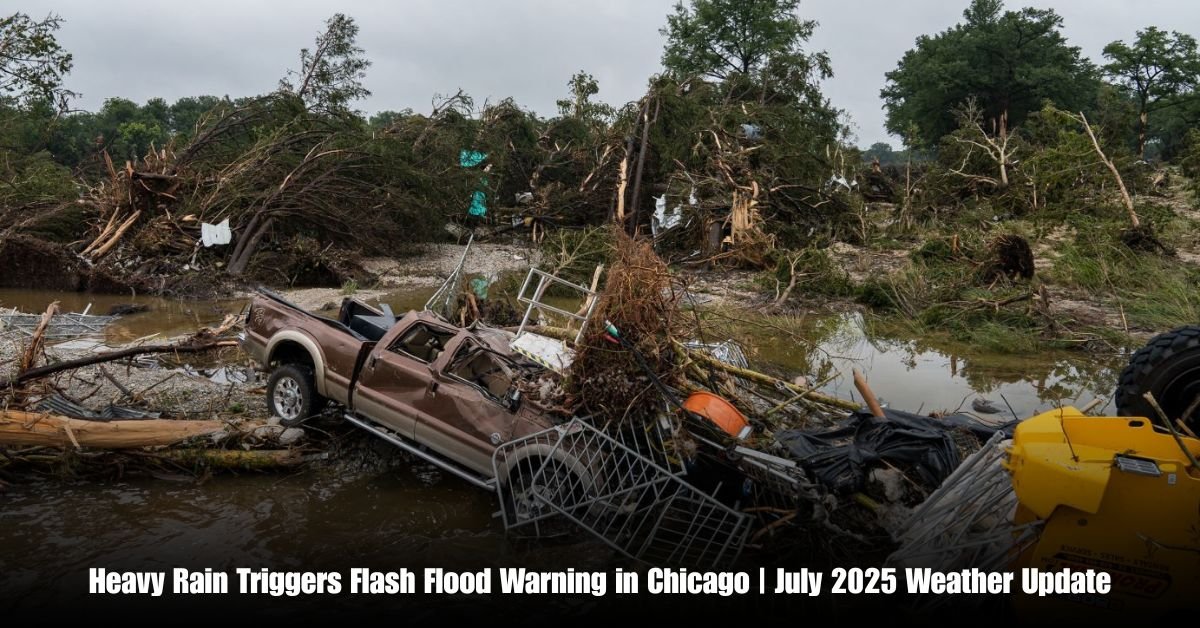
Heavy Rain Pummels Chicago Triggers Flash Flood Warning
Heavy ” Rainstorms ” drenched the Chicago area in July 2025 prompting a Flash Flood Warning. Learn about the weather impact affected areas emergency responses and safety tips for residents.
A powerful “storm system brought heavy rainfall to the Chicago metropolitan area this week prompting the National Weather Service NWS to issue a Flash Flood Warning. The intense downpours caused significant disruptions across the region affecting transportation flooding streets and prompting emergency responses from local authorities.
Flash Flood Warning Issued Across the Region
The National Weather Service issued a Flash Flood Warning early Tuesday morning for Cook County and surrounding areas cautioning residents to avoid travel and prepare for sudden water accumulation. According to meteorologists over 3 inches of rain fell within a short period overwhelming the city’s drainage systems.
Also Read : Guatemala Closes Schools in Capital Following Earthquakes | July 2025 Update
The warning was expected to remain in effect until late Tuesday evening depending on weather developments. Authorities emphasized that flash flooding could develop rapidly especially in low-lying neighborhoods underpasses and urban areas with poor drainage.
Impact on Roads and Transportation
As rainfall intensified throughout the morning major roads and expressways in Chicago became waterlogged making driving dangerous and in some areas impossible. Portions of Interstate 290 and Lake Shore Drive experienced heavy pooling causing vehicles to stall and emergency crews to conduct multiple rescues.
The Chicago Transit Authority CTA reported delays on several bus and train lines especially those servicing routes through the downtown and South Side regions. Commuters were advised to monitor service alerts and consider alternate routes or remote work options if possible.
Flooded Neighborhoods and Property Damage
Several Chicago neighborhoods including Albany Park Englewood and parts of the West Side reported severe street flooding and water entering basements and ground-level apartments. Residents shared videos on social media showing cars submerged up to their windows and sidewalks turned into rivers.
City “officials noted that the 2025 summer season has already brought above-average rainfall and this latest weather event further strained an aging sewer system already pushed to capacity.
Emergency Response and Public Advisories
In response to the flooding the Chicago Office of Emergency Management and Communications OEMC activated its emergency flood response plan. Sandbags were distributed in vulnerable areas and extra crews were deployed to clear storm drains and assist stranded motorists.
OEMC urged residents to:
- Stay indoors unless absolutely necessary
- Avoid walking or driving through floodwaters
- Monitor official channels for updates
- Report flooded areas or emergency needs to 3+1+1
Mayor Brandon Johnson addressed the situation during a press briefing stating:
Our priority is public safety We’re coordinating with emergency services public works and transportation departments to minimize the impact of this storm and protect Chicagoans .
Climate Experts Weigh In
Meteorologists and climate scientists noted that this type of extreme rainfall event aligns with broader trends of climate-related weather shifts across the Midwest. Warmer atmospheric temperatures can hold more moisture resulting in sudden intense rainstorms.
Dr Elena Ramirez a climatologist at the University of Illinois said:
These rapid downpours are becoming more common Cities like Chicago need to prepare for frequent episodes of urban flooding and invest in long-term infrastructure solutions .

What’s Next
The rain was expected to taper off late Tuesday night but forecasters warned that more scattered showers could persist through the week. Crews will continue to assess damage pump out flooded areas and provide support to affected residents.
Residents are encouraged to document any flood-related damages for insurance purposes and reach out to city services for cleanup assistance.
Conclusion
Tuesday’s storm “served as a stark reminder of the increasing severity of weather events affecting urban areas. As Chicago grapples with the aftermath of heavy rainfall and flash flooding officials stress the importance of preparedness infrastructure resilience and public cooperation to minimize future risk .